Tuesday, August 30, 2005

Need more gorillas

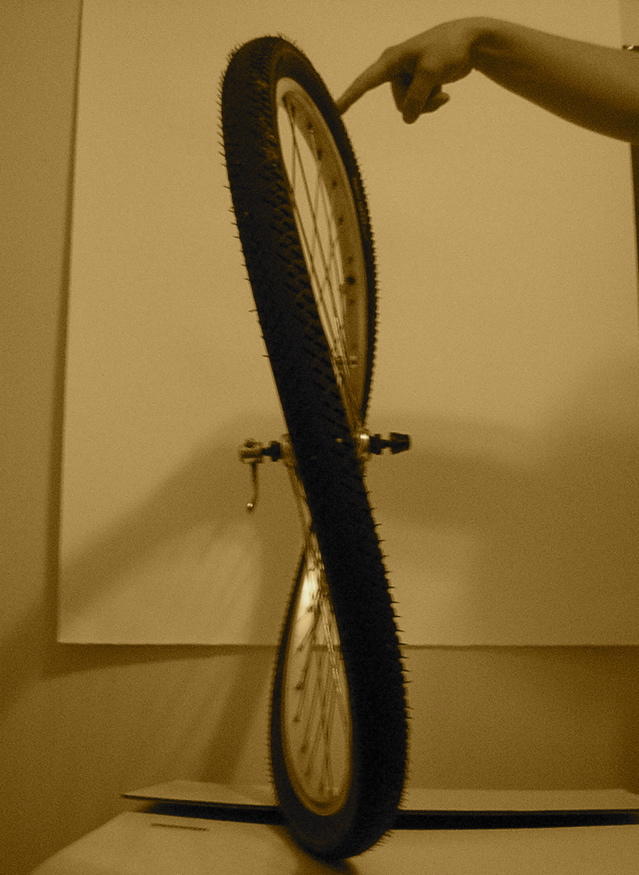
Star Bike Shop opened at 1 p.m. Sunday and I was there around 1:03 p.m. with my badly bent wheel and ruptured tire pump. Chuck Larcom, the owner, sold me a new wheel and told me to pick out a new pump from the sales floor, despite the fact that my damaged pump was more than a year old and had been heavily used. He said he'd take it up with the manufacturer. Star is an old school shop and off the beaten path. The hipsters seem to prefer The Bicycle Link, but I'm loyal to Star because the scenario described above is typical of my experiences there.

Chuck also gave me some very good advice to help avoid future encounters with cars. He said, "Ride like you're invisible." In other words, never assume someone sees you, even if they are staring straight at you. Sometimes motorists look directly at cyclists, he explained, but don't see them because they are so focused on scanning for other cars. It sounds like folksy bike store owner advice, but the inability of motorists to see cyclists (and pedestrians) may be due to something called "change-blindness," which is described here. A snip:

Working with Christopher Chabris at Harvard University, Simons came up with another demonstration that has now become a classic, based on a videotape of a handful of people playing basketball. They played the tape to subjects and asked them to count the passes made by one of the teams.

Around half failed to spot a woman dressed in a gorilla suit who walked slowly across the scene for nine seconds, even though this hairy interloper had passed between the players and stopped to face the camera and thump her chest.

However, if people were simply asked to view the tape, they noticed the gorilla easily. The effect is so striking that some of them refused to accept they were looking at the same tape and thought that it was a different version of the video, one edited to include the ape.

So, folks focusing on basketball passes don't see gorillas on the court and motorists watching exclusively for other cars may not see cyclists, even if they look them in the face and thump their chests. I think a possible cure for change-blindness is to get more gorillas on the court. Perhaps then, drivers won't focus so narrowly on spotting other cars. Looks like there will be plenty of cyclists on the street this weekend. Nonetheless, I'm still going to pretend I'm invisible.

Saturday, August 27, 2005

Hit by a car


Today around 6 p.m. I was riding east on 49th Street when I was hit by a westbound motorist making a left turn onto Reynolds Street. I am fine, aside from a scrape on my elbow. Unfortunately, my front wheel wound up under one of the car's tires. Looks like I'll need a new one of those. The driver was completely mortified and extremely apologetic.

I still needed to go to the grocery store, so I pulled my 1979 Peugeot UE-8 out of the bike shed and put the panniers on it. Unfortunately, when I was inflating the tires, something broke in the bottom of the pump. Rats! I wound up driving to the grocery store for the first time in about two months. It was not a very satisfying trip.

Thursday, August 25, 2005

Meet my utility cycle

This is the bicycle I've been riding most of this Bike Year. It's an L.L. Bean-branded steel frame hybrid, manufactured in China. It's known on the street as the "Acadia Multi-Terrain." Sounds tough, right? I traded a $20 bill for this bicycle at a garage sale earlier this summer.

The Acadia features legendary Shimano Altus C-20 components and grip shifters (I'm pretty sure Lance LeMond was running the Altus package the first time he won the French Open). I've modified the bike with parts from the sale and clearance areas of Nashbar, unless otherwise noted below.

I replaced the dry-rotted Kendas with Panaracer CTX 700x37C tires and new tubes, and installed Zefal Cab fenders. I swapped out the flat steel bar for one item I really splurged on: Nitto North Road aluminum upright bars from Harris Cyclery. The rack is a Nashbar LDT with Nashbar grocery bag panniers (shown in the folded-up position here). My headlight is a Cateye EL200. My taillight is a Planet Bike BRT-1 from my local bike shop of choice, Star Bike.

The unusual red water bottle you see in the cage is actually the reservoir for the incredibly loud AirZound horn, also from Harris Cylclery. Last week, I added a Planet Bike Protege 9.0 computer purchased at Star Bike. This will allow me to keep more a accurate measure of "Miles This Bike Year," for all of you playing along at home. This Acadia came to me with a nearly-new Serfas comfort saddle, which my wife wanted for her Raleigh M-40DX mountain bike. So, the saddle you see in the picture is the Avenir that came from her bike. That's probably the next thing I want to switch out. Also, for this project, I purchased my third bicycle-specific tool, a Park Tools FR-1 freewheel remover.

Last night on my commute home, I encountered a beach cruiser piloted by a guy wearing a turquoise-colored hardhat and an orange safety vest. At first I thought he was sporting some sort of improvised cycling outfit. But as I got closer, I examined his bike and noticed it had lights and a rear rack with really nice panniers. He was a TIC employee returning from a job site. That's right, this a confirmed sighting of a bicycle commuter dressed in his work attire. Are high gasoline prices leading more people to commute on bicycles? Oil is for Sissies is gathering evidence, Treehugger conducted a survey and Adrian endorses bicycle use. You decide.

Wednesday, August 24, 2005

New Urbanism, same old habits?

Somewhere in this morning's edition your local newspaper there's probably a wire story about a report released by the Trust for America's Health. The report, "F as in Fat: How Obesity Policies Are Failing in America, 2005," does not contain good news. The Savannah Morning News published an Associated Press story localized by reporter Eric Curl. He talked with Regina A. Cochran, the American Diabetes Association's local marketing manager. Here's a snip from the story:
Cochran added that Savannah isn't very exercise friendly once you get out of the historic district, but that may be changing.

"Some of the newer subdivisions seem to be doing a wonderful job of incorporating sidewalks and bike trails."

And she's right. The new developments erupting on the west side of Chatham County and in Effingham County are sprinkled with a few selected ingredients from the New Urbanism cookbook, including sidewalks and even parks. But are the residents of these communities actually using them?

Andre Natta knows a lot about communities and how they work. In this blog entry, he describes his experiences on a recent visit to Mount Laurel, Alabama. I'll offer a taste, if you promise to read the whole thing on Andre's Blog:
Here's what I don't get: people move out here to this community, buy their new old house out in this ideal town layout, get into their cars and drive 30-50 minutes due to traffic congestion to their jobs in the big city, get in their cars again at the end of the day to come home while stopping at the big boxes for their needs and the grocery stores for pre-prepared meals and then pull into their garages and roll up the sidewalks in their ideal world to surf the Internet and take part in a virtual community while ignoring the beauty surrounding them. This effective takes away from the walkability factor that many of these communities are based upon.
Has Andre accurately described the habits of this community's residents? If so, I suspect similar behavior can be observed in the new Savannah-area developments that so excite Cochran. When the Armada docks in the carport and discharges its passengers and cargo directly into the Beazer, Centex or Genesis, what happens next? Do the passengers and pilot emerge later to use the parks, trails and sidewalks? Or do they remain inside until the Armada sails again the next morning?

Last night I ran some errands and ended up putting about 13 miles on the bicycle. This morning, the little bug in the corner of my television screen featured the number 73, which I presumed indicated the relative humidity. But it turns out 73 was the temperature at 7:30 a.m. (The relative humidity was 84 percent). I took advantage of the "cool" weather and became a bicycle commuter, something I hope to be more often when the temperatures cool off again. That should happen sometime in November.

I usually do most of my bicycling in the evening, so I noticed some differences on my morning commute. Most notably, the traffic is heavier. I think I spied what might have been another bicycle commuter. He was dressed in shorts and a t-shirt, but his work clothes could have been in that messenger bag. Also, I saw a former mayor of Savannah walking into Pete's Sandwich shop for breakfast.

Friday, August 19, 2005

It's a long ride to Minnesota

My father-in-law says that it's good to have hobbies because they keep you young. If he's right, I'm pretty close to immortal by now. At any given time, I'm likely to be devoting some attention to shortwave radio listening, photography, surf fishing, camping, bird watching, making my own light bulbs, collecting Enoch Light records, amassing large inventories of reel-to-reel tape decks, cultivating bamboo, making dioramas of Civil War battles using ceramic clown figurines, armchair urban planning, or crashing remote control airplanes. And bicycles.

Rarely do any of my disparate pursuits align and that's why I'm jealous that I can't attend a event that Nathan mentioned last month on his blog. Everything about Bike-In at the Bell has my name on it. Except for the location. Bicycles! Rock music! Bizarre safety films from 1963! I wish I could be there.

Thursday, August 18, 2005

Utility bikes, off the rack?

While I was waiting my turn at the counter at the LBS yesterday, I wandered around the shop and looked at the bicycles on display. They could be divided into four categories: road bikes, mountain bikes, comfort bikes (I've included "beach cruisers" in this category) and children's bikes. I suppose there could be a fifth that includes recumbents, folding bicycles and other flavors that don't fit into the other four categories. But there weren't any of those on display at my local bike shop, which I believe to be fairly typical of most.

Another category not available for purchase: utility bikes. There were plenty of bicycles that could be used for recreational purposes, but none that were properly set up to serve as a person's primary or sole mode of transportation and cargo hauling. It's true that by modifying bicycles of the first three categories, with parts and accessories available at the store, a customer could create a utility cycle. However, there weren't any available "off the rack."

From my short tenure in the realm of utility cycling, I've learned that most people start with a road, mountain or comfort bike and repurpose it for utility cycling. And I must admit that fiddling with a bike, looking through bicycle accessory catalogs and fine-tuning my rig are appealing rituals of the UC cult. Yet it also occurs to me that the roll-your-own ethic of utility cycling may pose a barrier to potential converts. Some folks don't want to mess with all the details.

After all, when you pick out a new Toyota Camry on the lot, you don't then have to walk to another part of the dealership to select a trunk or order the headlights from third party vendor. I expect some potential utility cyclists would like to ride their purchases straight off the sales floor and to the grocery store. That's the way it works when you buy a car, right? You settle on the price, sign on the line and drive it off the lot.

If we want people to replace their cars with bikes, I think the buying experience should be similar. (Except for the price). I am aware of some manufacturers, such as Breezer, that are producing nearly complete utility bicycles. I suspect some high volume shops in larger communities are bundling bikes with accessories and displaying them this way. I hope this trickles down into more modest shops in smaller towns.

Meanwhile, in the background, operations like Xtracycle and Cleverchimp are really expanding the notion of what a bike can do. I think their products occupy the same place in the market today that early SUVs like the International Harvester Scout did in the early 1970s. They were specialized vehicles available to consumers who needed their particular capabilities, but not something people generally drove around town.

We all know the rest of the story. Today you don't need to go to a ranch or wilderness preserve to see the Scout's contemporary counterparts in action. Perhaps one day sport utility bikes (to borrow a term used by the Xtracycle people) will be as ubiquitous as SUVs are today. I look forward to walking into the local bike store and seeing Strokemonkey-equipped Xtracycles and other SUBs parked along models from the other categories.

After work today, I headed to the Jen Library to do a little research. Saw only one other cyclist on the way there, a dude on a beach cruiser weaving from one side of the street to the other as he slowly made his way. There were plenty of students' bicycles in the racks at the library, as usual. On the way home, near the corner of Habersham and Henry streets, I saw I gentleman stepping back to admire his beach cruiser, which was parked on the sidewalk. It had so many blinking red and blue lights on the back, it looked like a thin slice of a squad car. "Looks good," I said. "Alright now!" was his reply.

Wednesday, August 17, 2005

Atlanta commuters consider drastic measures

Yesterday the Atlanta Journal-Constitution ran a story on high gas prices. This is big news allover, of course, but is particularly worrisome to folks who live in Atlanta, one of the most automobile-dependent cities on the planet. I use the phrase "live in Atlanta" loosely. Most Atlantans don't actually live in Atlanta proper, but rather in part of what Kunstler called a giant hairball of a thirteen-county demolition derby. The hairball now stretches all the way to Chattanooga.

The term "city" is also problematic when describing the metropolitan area that I have called home twice in the last decade. Think of a major American city and you can usually conjure an image of something that makes it unique, that adds to a sense of place. When I lived in Atlanta and entertained out of town guests, I struggled when they asked me to take them to a unique local attraction. You know, the real Atlanta. Problem is, Altanta is so much like everywhere else, it's not really a distinct city anymore. It's everywhere USA! Most anything that might have made it different was long ago sacrificed so that Atlanta's economic engine could surge ahead, unimpeded by outmoded buildings, landscapes or local character.

At any rate, the thing that interested me about this news item was not the story itself, but a blog-style "forum" in which readers were asked to describe what kind of cars they drive, the length of their daily commutes and what, if any, changes in their motoring routines they had made in the face of high gasoline prices. Naturally, the banner at the top of the Web page was occupied by an advertisement for a local Hummer dealership.

The responses were surprising: Atlantans were actually using previously taboo words like "MARTA" and "carpooling." Still, I got the feeling that such drastic measures as these were to be employed only until gas prices returned to a "reasonable" level. One satisfied respondent boasted about the fuel efficiency of his motorcycle. "There wouldn't be a problem if we all rode motorcycles," he wrote. Substitute "bicycle" for "motorcycle" and he'd be right.

Last night the pedal-gazing cyclist passed me again, just inches away from my left elbow. I watched him reach the intersection of Habersham Street and Derenne Avenue, then U-Turn, put his head down and push back north. I guess he's training for something. Also, a guy with a cell phone pressed to the side of his melon turned his bike onto Habersham about a half block ahead of me. He seemed to be having trouble operating his bicycle with one hand on the bars and the other on his Nokia. As I passed him, I saw the name Eddy Merckx on the side of his bicycle. Looks like that's a pretty nice bike.

Before I left, I thought about topping off the tires, but I was too lazy. I could really detect the extra rolling resistance and regretted having neglected this chore. Jim at Oil is for Sissies offers a terrific bicycle maintenance primer, which includes a lesson on proper tire inflation. It's probably a good thing to print out and tack to the wall of the bike shed. Too bad I read it this morning and not last night.

Tuesday, August 16, 2005

From Southeast to Downeast. And back.

I've returned from my longest vacation in 12 years. I missed six whole days of work and put more miles on my car in 10 days than I will in the next 20 weeks. The ultimate destination of this trip was Downeast Maine.

I can report that our nation's interstate highways are brimming with bicycles. Of course, they are not being ridden (except for the shirtless dude riding against traffic in the emergency lane of I-84 outside of Hartford). Rather, these bikes are attached to automobiles and trucks, most commonly via trailer hitch mounted racks.

I saw plenty of bicycles in use on Mount Desert Island, however, as well as on U.S. Highway 1. Some of these folks had their bicycles loaded down with luggage and camping gear, which had me wondering if they'd ever heard of the Xtracycle. In Bar Harbor and Acadia National Park, bicycle traffic was common and most motorists were courteous.

One type of bike that I did not enjoy seeing (or hearing) all over Mount Desert Island: Harley-Davidson and other "loud pipe" motorcycles, with which the place is positively infested. Their obnoxious roar was constant on the streets of Bar Harbor. At night in the otherwise quiet Lamoine State Park, I could hear the bellow of the bikes as they barreled down the causeway, miles away from my tent. In my city, the noise generated by loud car stereos is a popular complaint. Still, no one seems to mind the roar of status symbol motorcycles, which I find much more annoying than the average teenager's subwoofer.

Last night I went to the grocery store after dark and encountered four other cyclists on my trip. None were running with lights. One was riding against traffic on a particularly dark stretch of Habersham Street. Another passed me on the left with about an inch to spare. He had his head down and was really pedaling hard. He sailed through the red light at 63rd Street without looking up.

Monday, August 01, 2005

The "J" factor?

Obviously in direct response to my Saturday post about suburban development, reporters and editors at the Savannah Morning News stayed up all night in order to have the first part of their series "Chatham's New Direction" ready on Sunday morning. Today's installment looks at the new residential construction erupting in the west part of Chatham County and asks, "Who's going to live in all these new houses?" It's a question Bill Dawers asked in his "City Talk" column several weeks ago. As usual, Bill's ahead of the curve.

In this morning's paper, a developer shares his theory about the origin of the folks who will be moving into these far-flung communities:

"It's what we call the 'J factor' -- the pattern of snowbirds coming down to retire in Florida, becoming disillusioned with the congestion and other things, and then hooking back up the coast into Georgia."

If I understand this correctly, retirees are fleeing the sprawl they helped to create in Florida, by moving up to Georgia to start the process all over again. In 5-10 years, their refuge will be indistinguishable from the environment they hoped to escape. I guess they figure they'll be dead before the sprawl gets bad enough to force them to move again. In the meantime, the J-factor crowd and their neighbors should get used to increased traffic on 1-16, I-95 and other limited access arteries that represent the only way in and out of these communities. Already, a morning pile up on eastbound I-16 results in empty desks all over Savannah at the start of the workday. And it's only going to get worse.

Back to Sunday's paper for a moment, I was pleased to see a wire story about Merlin Mann and his Hipster PDA. Finally people around here will understand what I'm doing with these index cards! I don't expect anyone to take advice on organization and efficiency from a guy who wastes trips to the library because he can't remember to take his library card or bicycle lock with him, but trust me, without Merlin's GTD hacks I probably wouldn't have remembered to bring my bicycle.

I discovered the good work Merlin's been doing after I woke up in the middle of the night worrying that I owed him $50 from a gig a decade ago. After I Googled him and read a little about his religion, I realized that waking up in the middle of the night and worrying over 10-year old debts is what GTD is supposed to prevent. Like the man says, get it out of your head and into a system you can trust. I'm not there yet, but I'm getting closer.

Saturday, July 30, 2005

How to ride your bike more

The answer is simple: forget things you need to take with you.

I was on my way to the library, when I realized that I'd left my library card at home. I was suitably scolded for this transgression during my last visit to the circulation desk and I did not wish to experience a reenactment. So I went home and got it.

Upon arrival at the library, I found a space at the rack and then discovered that my lock was in neither of the panniers. So I had to turn around and go home. Now I have to get ready for dinner at a friend's house and there's no time to go back. No big deal. The books aren't actually due back until tomorrow, which gives me an excuse for another ride.

I'm a little frustrated, sure. But if I had driven instead, I'd be even more annoyed. I'd have wasted gasoline and still wouldn't have nothing to show for my efforts. On the other hand, my reward for being forgetful on a bicycle trip was an enjoyable 5 mile ride on a sunny Saturday afternoon.

On the trail of the energy bill

Jim at the excellent Oil is for Sissies blog offers a fine description of how motorists behave differently in Minnesota suburbs, as compared to the "grittier neighborhoods of South Minneapolis." However, the thing that strikes me about his post A ride in the burbs is his mention of bike trails and how he uses them to get where he needs to go. This emphasizes the difference between the thousands of miles bicycle trails (at least that's the way it sounds to me from Jim's accounts) in Minneapolis and the two trails I know to exist here in Savannah: Our trails don't really go anywhere.

The 6-mile McQueen's Island Historic Trail and the .7-mile Police Memorial Trail Loop are perfectly acceptable facilities for recreational cyclists, but if you want to get somewhere, not so much. But it looks as if the much-maligned $286.5 billion federal transportation bill may be changing this, if only a little. A front page headline in the Savannah Morning News today proudly proclaims "Millions of dollars headed our way." According to the story, the legislation includes:
  • $1 million for Phase II construction of the Truman Linear Park Trail, a 5.25 mile asphalt shared-use path running between Lake Mayer Park and Daffin Park.

  • $160,00 toward the Heritage Rail Greenway, 3-mile multi-use trail that will run alongside a historic rail line and connect Savannah's Historic District to the Georgia Railroad Museum.
The extension of the Truman Linear Park Trail may be of some use to utility cyclists and likely connects to the Police Memorial Loop mentioned above. But I can't understand exactly what the "Heritage Rail Greenway" is all about. Maybe someone can enlighten me about the proposed route. Of course, hard core vehicular cyclists would surely say that bike trails of any kind are a bad idea, as they reinforce the idea that bicycles do not belong on the streets. Also, a study mentioned in this newspaper story suggests that multi-use trails are dangerous to cyclists and the VC advocates probably agree. Still, I'm excited about the possibility of new trails.

The real "good news" in the newspaper story is the money going to new road construction including $3.2 million for the construction of the "Effingham Parkway," which will link state state route 119 with 30 and should stimulate even more suburban development in Effingham County. Earlier this week, WTOC-TV aired a typically upbeat story on new residential and commercial development in Effingham. Like most local television news stories on suburban development in Effingham, West Chatham and counties just over the border in South Carolina, it was breathlessly positive. After all, growth is good, right?

When the package ended, anchor Dawn Baker said this about Effingham County in her segue to the next story: "In 10 years we won't even recognize it." I think what she really meant is that the area will look a lot different in 10 years when the land is covered with McMansions. We will recognize it, however, as more of the same kind of suburban sprawl that encrusts cities all over the country. If Jim Kunstler is right, these communities, so joyfully heralded now, have no future.

Finally, on an unrelated note: Last night at Publix, an employee offered to take my groceries out to my car for me. I almost agreed, just for the chance to see her expression as she followed me out to my bicycle, parked about 15 feet from the front door. As usual, I chickened out and took the groceries to my "car" all by myself.

Thursday, July 28, 2005

Cars drive local TV

Yesterday I made a half-hearted attempt at yard work followed by a pitiful excuse for a bicycle ride. The heat index was still 143 degrees at 8 p.m. , so I decided to go inside and enjoy some good old American broadcast television. I tuned my TV set to a station affiliated with the Fox network and watched a program called "What Makes You Think You Can Dance?" Or maybe it was, "Who Told You to Start Dancing?" Or it could have been, "You Can Dance if You Want to."

At any rate, this program featured a dancing competition, judged by a three person panel: a British man, a British woman, and another British man, who seemed relegated to the role of agreeing with whatever the first British man said. Also, he appeared to be in charge of cuing the music on the CD deck. I never could figure out what the dancers were competing for, other than a place in the Pantheon of unforgettable former reality show stars, alongside the Bedazzler lady from "The Apprentice," the woman with Lyme disease from "Real World: Seattle," and the dude with the beard from the second season of "Survivor."

But that's not important. I wasn't so much interested in the popping, locking and Krumping demonstrated by the dancers. I wanted to see the commercials. For one long hour of this 90 minute program, I cataloged the commercials I saw into three categories: Car (includes automobile manufacturers and dealerships) Car-related (includes auto insurance companies, title pawn shops and auto parts stores) and Tangentially car-related (includes Checkers and other fast food restaurants that don't have dining rooms, far-flung real estate developments that can be reached only by car, and attorneys who specialize in auto accident claims). Here's the score:

Total commercials: 32
Car: 5
Car-related: 1
Tangentially car-related: 0

By my calculations, car and car-related commercials represented about 19 percent of the advertisng content of this prime time network program.

But what about a local broadcast? During the 30 minute newscast that followed "Dance Dance Revolution," the results were much different:

Total commercials:
13
Car: 7
Car-related: 1
Tangentially car-related: 1

Car or car-related commercials represented nearly 70 percent of the spots aired during the newscast.

Tuesday, July 26, 2005

The Cadillac of bicycles

Todd is also pondering the "Lance Effect" and comes to a slightly different conclusion than I did. He doesn't seem all that confident that new bicycle owners, inspired by Lance Armstrong, will discover that their machines can serve as viable alternatives to their automobiles.

If I'm reading Todd correctly, the message he gets from Armstrong is this: A bicycle is a device that can mold you into an athlete of incredible stamina, who defies expectations and overcomes obstacles. In this way, a bicycle is no different than a rowing machine. It will improve your physical prowess, but you wouldn't want to ride one to the video store. I guess a fancy road bicycle, like Armstrong's Trek, is sort of like an exercise bike you'd see in a gym, except it's more "extreme" or "in your face" on account of you can strap in to the top of your SUV and drive around with it up there.

Speaking of SUVs, the thing to have mounted to the roof rack of your Escalade is a new Cadillac Bicycle. My brief visit to the Cadillac Bicycle Web site did not reveal any children's bicycles, but that didn't stop Detroit's NBC affiliate from describing the bicycles as a New Children's Luxury. After all, what kind of respectable adult would ride a bicycle?

Luckily, the folks at Cadillac have offered some (mostly good) riding tips, should any of their customers actually try to use one of these bicycles. My favorite in No. 5: "Avoid biking at night."

Friday, July 22, 2005

A change in direction

If you are a regular Bike Year visitor (I'm pretending that there is such a thing) you'll soon notice a departure from the previous fare offered here. I'm afraid my past inventories of bike lane debris, accounts of air horn use and reports of stolen bicycle lights made for pretty dull reading. From here on out I'll dispense with the boring accounts of utility cycling, unless I have something interesting to report. In other words, if I see a Yeti riding a bike down Habersham Street, you'll read it here. A guy pulling a lawnmower behind his bike? I'll probably keep that to myself. Thus, the risk of lapsing into a coma while reading this blog should be greatly reduced.

Does Lance ride his bike to the store?

Media reports over the last couple weeks (this item from a Louisiana NBC affiliate is a good example) suggest that this Armstrong fellow's success in a French bicycle race is causing Americans to drive to their local bike shops and pick up machines of their own.

I suspect this Lance-induced mania for road bikes will be short-lived and could come to a grinding halt when European riders regain ownership of the Tour de France. It's probably nothing more than a small-scale revival of the Bike Boom of the 1970s. Still, if it puts more bicycles on the streets, I think it's a good thing.

I'm wondering how many of these new cyclists will get hip to the notion that they can use bicycles for more than recreation. I wouldn't recommend bolting grocery bag panniers to the back of a Madone SSL, but maybe seeing the world from a bicycle could influence some folks to see their bicycles in a different way. This will be helpful, especially if it turns out that everyone will need to become more familiar with cycling in the future.

Wednesday, July 20, 2005

Sand gnabbed

Peddled my trusty old 1979 Peugeot UE-8 to historic Grayson Stadium to see the Savannah Sandgnats dominate the Augusta Greenjackets. (Thanks for the tickets, Gnate). After the game, I unlocked my bike and reached down to activate the taillight when I discovered that it was missing. Stolen! The thief was pretty determined to have my $6 light; it was glued to the rear rack of the bike.

Miles:
2
Weather: Clear, 90 degrees.
Time of day: Evening
Other cyclists observed: 1 (recreational)
Number of cyclists riding on the wrong side of the street: 1
Total miles this bike year: 67

Tuesday, July 19, 2005

A confession

I've not previously disclosed the fact that my much-celebrated back route into the Twelve Oaks shopping center requires me to ride on a sidewalk for about 15 feet. This short stretch of sidewalk links Varn Street with the Buckingham South parking lot. Although I've never actually seen a pedestrian on this sidewalk, I suppose the proper thing to do is to walk the bike through this area.

At any rate, I feel comfortable admitting this now because last night I saw a man drive a Mazda Miata down the sidewalk and into the Buckingham South Parking lot. Apparently my secret path to Publix isn't so secret. After the Mazda had passed, I inspected the curb near the sidewalk and saw that it bore the scars of many encounters with automobile undercarriages.

Miles:
5
Weather: Clear, 90 degrees.
Time of day: Early Evening
Other cyclists observed: 5 (recreational) 1 (competitive, training)
Number of cyclists riding on the wrong side of the street: 5
Total miles this bike year: 65

Bikes live downtown

Stopped by the library to check out some books and then the office to collect a book I'd left there. I haven't ridden the bike downtown lately, so I was sort of surprised how many other cyclists I saw.


Miles: 6
Weather: Clear, 93 degrees.
Time of day: Morning
Other cyclists observed: 18
Number of cyclists riding on the wrong side of the street: 5
Total miles this bike year: 60

What's that in the bike lane?

I set out for Publix after dark Friday night. I was southbound around 61st Street, when I saw something in the northbound bike lane. As I got closer, I could see that it was a man in dark clothes walking a bike with a lawnmower tied to the back of it. No lights.

Just a couple days later on the other side of town, a cyclist was hit and killed by a car. He was also wearing dark clothing and had no lights. I wonder if a local organization could organize a program to provide, at the very least, clip-on blinky lights to bicyclists.


Miles: 5
Weather: Clear, 90 degrees.
Time of day: Eventing
Other cyclists observed: 1 (transportation/utility)
Number of cyclists riding on the wrong side of the street: 0
Total miles this bike year: 54

Wednesday, July 13, 2005

Weekend update

I know, I know it's Wednesday already. Here's what's happened since our last exciting episode.

Friday, July 8: An afternoon at the beach on Friday inspired me to head to Publix for some Wild American Shrimp. North of the Habersham Village area, a white Mercedes overtook me, pulled into the bike lane, stopped and the started coming toward me in reverse. I steered into the main lane of traffic to avoid the car. As I passed I prepared to issue a mighty blast from the air horn. Just as I passed the driver's window I hit the switch and...a pathetic "meow" escaped from the horn. I must remember to keep that air reservoir full.

Miles: 5
Weather: Clear, 93 degrees.
Time of day: Early evening
Other cyclists observed: 1 (recreational)
Number of cyclists riding on the wrong side of the street: 1
Total miles this bike year: 21

Saturday, July 9: H came with me rent DVDs from Hollywood Video and pick up some items from Publix. Our trip back across Abercorn from the video store was delayed because our bikes would not trigger the traffic signal. Soon enough, a car came up behind us. The light turned green and we crossed with the car, sort of like remoras traveling with a shark. On the way home, I noticed a strange object ahead in the northbound bike lane. As I approached I realized that it was a blown-out bicycle inner tube. I hate all the debris that winds up the bike lanes, but at least this came from another bike.

Miles: 5
Weather: Overcast, 87
Time of day: Early evening
Other cyclists observed: 0
Number of cyclists riding on the wrong side of the street: 0
Total miles this bike year: 26

Sunday, July 10: My original destination was Star Bike on Montgomery Cross Road. But I ended up going much farther than that. Before stopping in at Star, I made a side trip to K-Mart. I bought a cheap Bell rearview mirror for three bucks. I installed it out front where I had locked my bike to a display swing set (no bike racks to be found).

As I exiting parking lot, a Honda Accord travelling on a diagonal path across the parking lot passed a couple feet in front of me. Gave him a blast of the air horn. He looked startled. Then honked back.

Not three minutes later on the other side of White Bluff Road, a car overtook me and the driver laid on his horn, because, well, I don't have any idea why people feel compelled to do that. I responded on the air horn and the effect was dramatic. This particular motorist preferred to operate his vehicle from a nearly horizontal position (his seat was nearly fully reclined). Well, when he heard the horn, he sat upright as if he had been awakened from a dream. He slowed the car, craned his head around to see where the noise came from and stared at me for a couple seconds and then blew his horn again. Then he turned right at the next intersection (without stopping for the stop sign).

At Star Bike I bought a Planet Bike taillight, something that was missing from my rig. I noticed the bicycle path continued past the shop. I wondered, how far did it go? I had to find out. I followed it through the Paradise Park neighborhood and then crossed Abercorn on Tibet Avenue. The path continued down Largo, crossed back across Abercorn and into the Windsor Forest neighborhood where it either it ended or I lost it. I realized how close I was to the Savannah Mall, so I decided to stop in at Target. On the way home I took Middleground Road, turned near St. Joseph's Hospital, and eventually made it back to Largo, at which point I rejoined the bike route.

I stopped off at Publix on the way home. I locked the bike to a long cart corral that's located in front of the building. It's under the overhang of the building and normally doesn’t have any cars in it. When I came out of the store, the bike was leaning at an extreme angle, held upright only by the lock cable. Someone had rammed a shopping cart into the handlebars. It didn't look like an accident.

On the way home, a guy on an electric scooter departed the Jones Red and White store and rode north in the southbound bike lane, all the way to 50th Street.

I tracked my route on this handy Goople Maps mod site. The results are here.

Miles: 49
Weather: Overcast, 85
Time of day: Afternoon
Other cyclists observed: 1 (utility) 8 (recreational) 2 (competitive/training)
Number of cyclists riding on the wrong side of the street: 4
Total miles this bike year: 44


Tuesday, July 12: Returned the DVDs. There were no cars available to trigger the light, so I had to ride over to the pedestrian signal and hit the button. This whole area is so inhospitable to pedestrians; I wonder how many people have actually pressed that button. The light does not allow much time to cross the street, so pedestrians really have to step it up, I bet.

On the way home, the northbound bike lane was full of runners. Two, headed north, turned onto side streets before I got closer than a half block away. One southbound runner moved to the sidewalk as I approached. This was the latest I've been on the road this Bike Year. Fired up the lights on the way home.

Miles: 49
Weather: Clear, 90
Time of day: Evening
Other cyclists observed: 1 (utility)
Number of cyclists riding on the wrong side of the street: 0
Total miles this bike year: 49