Wednesday, December 06, 2006

My MacGyver moment

On Friday, as I was getting ready to go home, I couldn't find my front light. I looked in my bag and in my office. No luck. I figured I had left it attached to the bike, which in my town is the same thing as leaving a sign taped to the handlebars that reads, "Please take this light home with you."

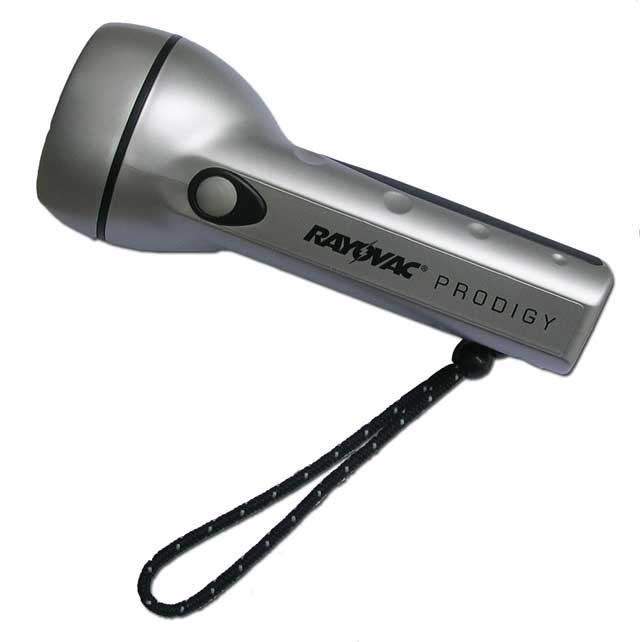
I found a flashlight in a desk drawer and lashed it to the handlebars with a bungee cord. Every time I hit a bump, the flashlight's beam would swing up into the trees. It was a constant struggle to keep it aimed toward oncoming traffic.

When I got home, I found my light in a deep, dark corner of my bag.

Thursday, November 30, 2006

Square tactics

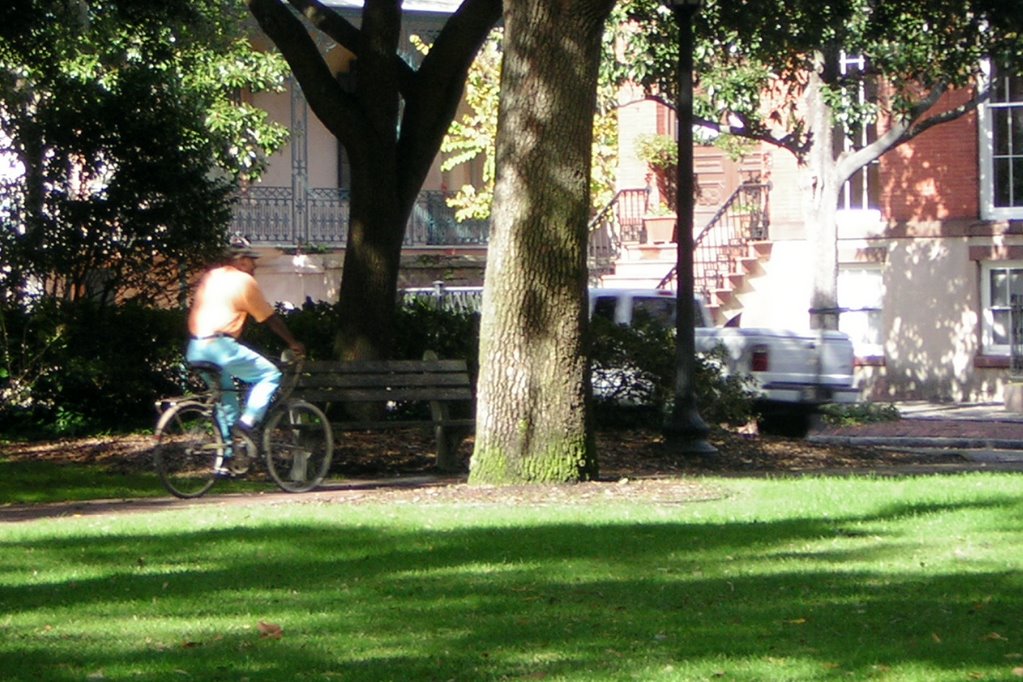
According to Savannah's Code of Ordinances, riding bicycles through the squares of the National Landmark Historic District is prohibited. The ordinance, I presume, is aimed at preventing bicycle vs. pedestrian collisions. I'm not sure if these types of encounters were actually happening. Perhaps there were simply fears that they would. At any rate, the ordinance was decried by some cyclists, who claimed riding through the squares was safer than riding the perimeter, which they said put them in danger of being smeared onto the sides of parked cars by moving ones.

At the time the ordinance was passed, I was also a critic, mainly because I thought it placed at odds two constituencies that ought to be allies. After all, pedestrians and cyclists have much more to fear from motor vehicle traffic than they do from each other. When I started my utility cycling experiment, I researched best practices and learned that the perceived safety of sidewalks is an illusion. I realized that cyclists, who ride on the sidewalks through the squares, risk being hit when they rejoin the street on the other side.

The ordinance is sporadically enforced, unlike all other bicycle-related laws, which are never enforced. Every so often, the Savannah-Chatham Metropolitan Police Department will make an example out of a Savannah College of Art and Design student. If you believe letters to the editor of the Savannah Morning News, SCAD students are all perpetual square abusers.

I conducted an observation yesterday in Monterey Square. For 30 minutes I counted cyclists and wound up with a total of 12, with only two riding through the square. The two, who did ride through the square, were moving slowly. Any potential collision with a pedestrian could have easily been avoided by either party. Nonetheless, had they been ticketed, each of these cyclists would be $100 poorer.

I must point out two obvious flaws in my methodology. First, SCAD is on winter break, so my sample did not include as many students as it normally would. Second, about halfway through my observation, an interesting character sat down on the bench next to me. He launched into a monolog that began with a description of his ability to resist the charms of both New York and international supermodels, moved on to an explanation of the pagan origins of wedding rings, and concluded with a description of the type of churches that "make God puke." He also provided detailed summaries of the results returned when he Googled the words tribal, spew, spell and italic.

Somewhere along the way, I forgot to count bikes. I'll try again next year.
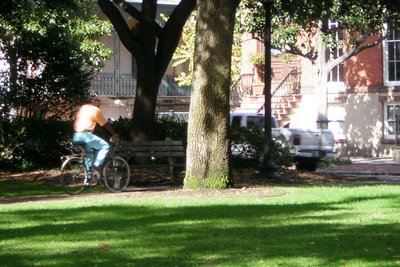
Wednesday, November 29, 2006

More about the weather

Savannah experienced an uncharacteristic episode of cold temperatures and even snow last week, although all I saw was rain. I actually enjoyed riding in the rain and (relative) cold, except for my hand parts, which needed some handsocks or gloves, as they are sometimes called. All last week I was really interested in what was happening in the atmosphere. There are instruments designed for this purpose, including thermometers, barometers, psychrometers and anemometers. Then there's the Weather Channel and the local television news. All good ways to determine the current weather conditions.


I've discovered another instrument for determining the current weather conditions. It's called a bike rack and here's how you read it: As the temperature rises to 60 degrees, the number of bicycles attached to begins to increase. When the air temperature reaches 80 degrees, the number of bikes attached to the rack begins to decrease. So, if you examine this photo of the bike rack outside my office, you can easily see that the temperature was 75 degrees.

Tuesday, November 28, 2006

Reporting from the danger zone

A story from the University of Florida's Independent Alligator newspaper uses that state's status as the national leader in bicyclist fatalities to frame a thorough and thoughtful examination of local bicycle safety issues. It's doubtful that the Gainesville Sun or any other general circulation newspaper would have devoted so much ink to the issue. As a student newspaper, the Alligator's readership probably includes a substantial contingent of transportational cyclists and I consider Drew Harwell's piece a fine example of a newspaper serving its audience.

Monday, November 27, 2006

Signs of life

I recently exchanged e-mail with Atlanta Larry, who is pondering a utility cycling experiment of his own. I'm a two-time former resident of Atlanta and I sometimes wonder if I would have eventually started utility cycling and/or bicycle commuting had I stayed there. My bicycle hibernated in a friend's basement for all but a couple days of the 18 months I lived there in 1999 and 2000. I suppose I found the hills and the traffic a little intimidating. I wonder how I'd make out now. On my last visit I noticed an abundance of Atlanta Bicycle Campaign "Share the Road" yard signs. I don't ever remember seeing those when I lived there.

Wednesday, November 22, 2006

Grocery getting

From the very beginning of Bike Year, shopping for groceries has been one of my favorite bicycle errands. Grocery bag panniers, either store bought or homemade, make the job significantly more enjoyable. Some folks prefer using a large messenger bag or backpack.

I'm still pleased about discovering a back route into Twelve Oaks Shopping Center, which sits near the confluence of two five-lane rivers of asphalt. Penetrating the exclusive domain of cars and seeing the surprise on motorists faces as I pedal through the parking lot remains satisfying. They look at me as if to say, "I wonder how he got in here."

The novelty of a bicycle appearance at the Twelve Oaks Publix store probably explains the absence of a bicycle rack. The idea of providing a bike rack probably never occurred to the store's managers. It doesn't occur to most, it seems.

To my knowledge only two grocery stores in the city of Savannah offer bicycle storage facilities. Both are located within a mile of each other, but they occupy opposite ends of the retail grocery spectrum. Brighter Day Natural Foods is a locally-owned, independent store located in a historic building on Park Avenue at the southern end of Forsyth Park. The Gwinnett Street Kroger is one of five local manifestations of the nation's largest supermarket chain. Yet both stores have seen fit to provide bicycle parking for their customers. Bike nerds will notice differences in the bicycles parked at each store.

Tuesday, November 21, 2006

Talking about the weather

Yesterday one of the TV weather guys urged viewers to get their shopping done early. If they waited until Tuesday and Wednesday, he warned, shoppers might have to endure rain and wind as they dashed from their cars to the supermarket.

This didn't strike me as an odd comment until I really thought about it. Except for people who work outside, inclement weather is a phenomenon most Savannahians experience only in brief installments. It's something that happens between the house and the car, the car and the office, the office and the car, the car and the store, the store and the car, and the car and the house, again.

One nice thing about bicycle commuting: I feel more connected to the weather and the seasons. However, I might have a different opinion about that connection later today.

Monday, November 20, 2006

Bikes on the Hill

An Associated Press story suggests that the Democrats' success in the midterm elections could be a good thing for cyclists. At least three bicycle friendly representatives will be rising to leadership positions in the House Transportation and Infrastructure Committee and the surface transportation subcommittee.

The League of American Bicyclists called the results a "Great Election for Bike Caucus." This was my first time hearing of the Congressional Bike Caucus, which aims "to encourage Congressional leadership to complement the efforts of the millions of cyclists working for safer roads, more bikeways, convenient bike parking and increased recognition of the importance of cycling to our communities." I'm pleased to learn the congressman representing Georgia's 12th District is a member of the Bike Caucus.

Friday, November 17, 2006

Some words on the Streets

I followed Aaron Naparstek from naparstek.com over to his current operation Streetsblog. While Streetsblog is primarily concerned with New York City transportation issues, it also presents a big picture view that's valuable to folks who live elsewhere. Or, as another streetsblog reader put it in this post:
I wanted you to know that Streetsblog, despite its New York City focus, has an impact beyond. I have a much broader set of analytical tools to bring to bear to my small problem and the larger bike and pedestrian issues that I am beginning to become involved with.

Streetsblog's regular "Today's Headlines" feature aggregates news stories from across the country. I've even suggested one that Aaron picked up. Those who don't live in New York should still consider spending some time on the Streets.

Thursday, November 16, 2006

The bane of motorists

To all bicyclists using major arteries as most Americans are going to, or leaving work,
GET OFF THE ROAD!
-- Michael, Penfield, NY.

I usually assume that motorists pull out in front of cyclists or pass them too closely because they don't see them. Michael provides a timely reminder that some people endanger cyclists because they do see them. I discovered his "Bicyclists: The Bane of Motorists" because he included a link to Bike Year, describing it as good place to check out "lots of bike-crybabies."

Maybe Michael's not as troubled by bicycles as he claims to be. Perhaps he's demonstrating his crankiness in hopes of scoring a sidekick gig on a small market classic rock station's morning zoo crew. But let's pretend he's for real. His chief complaints, as far as I can tell, are:

1. He doesn't like it when cyclists ignore traffic regulations.
2. He disapproves of their fashion choices.
3. He hates sharing the road with slower vehicles.

I can dig what Michael's saying on the first point. Although I would include not just cyclists, but all vehicle operators who ignore traffic regulations. As for the second point, I'm occasionally amused by the costumes some folks don before going for a ride, but their clothes don't anger me as they do Michael. On the third point, he excuses the slow pace of tractors and construction equipment, noting that "they are almost always used for work, not transportation," but he can't stomach the idea of following a bicycle until it is safe to pass.

He thinks bikes aren't fast enough for public roads. I think cars are too fast for public roads. And so it's here that Michael and I can find no common ground. Or can we?

I have a solution that will work for both of us. Instead of the "bike-free" roads or "bike's only" lanes Michael proposes, a more practical solution is strict enforcement of 25 mph speed limits for all vehicles. That way, the gap between bicycle and car speed virtually disappears.

Michael might be happier traveling at a less frantic pace. He wouldn't be forced to "lock down on" his brakes after "rounding a difficult curve." There's not much call for brake lock downing at 25 mph. He will also find the difficult curves easier to negotiate at lower speeds. On the other hand, what about those times Michael wants to go faster? Well, unless he's using his Honda Accord as some sort of freelance ambulance, there's simply no justification for speeding. After all, cars are almost always used for transportation, not work.

Wednesday, November 15, 2006

Three months later

I'm still riding my bike. Just not the same bike. But more on that later.

The big transportation news here in Savannah is the Georgia Department of Transportation's plan to widen Abercorn Street Extension on Savannah's south side. The possibility of more lanes has been reported by local television news operations with barely concealed glee. An editorial in today's Savannah Morning News introduced its position on widening Abercorn and other commuter routes with this:

"Rush-hour drivers have probably considered just leaving their vehicle on Ga. Highway 21 and walking to work."

Of course, this is another example of a perfectly acceptable method of transport likened to some sort of deviant behavior. To be fair, it would be unreasonable for a person with 50 mile round trip commute to try walking to work. But is it any more reasonable for motorists to expect quick and easy passage twice a day through 25 miles of sprawl, amidst thousands of other single occupant motor vehicles?

But adding more lanes will solve the problem, won't it? It seems unreasonable to think so. Like the man says, "Trying to cure traffic congestion by adding more capacity is like trying to cure obesity by loosening your belt."

Tuesday, August 15, 2006

The new (old) bike

The green L.L. Bean hybrid bicycle that appears to the right is no longer with me. Last month I sold it in an effort to reduce my bicycle inventory (mine was a two person, seven bike household). This initiative also included the sale of my 1979 Peugeot UO-10 single speed conversion.

There was really nothing wrong with the Green Bean. It was a perfectly serviceable bike. The bottom bracket was starting to get a little creaky, but other than that, it was mechanically sound. I've heard that the new owner is making good use of it. I just wanted a change.

Since the sale of the Green Bean, I've been using two of my remaining three bicycles for my commute. One is a 2005 Raleigh M40 DX, which I'll be become my primary bike after I complete some alterations (more on that in a future post).

In the meantime, the bicycle I'm riding most often is a 1979 Peugeot UE-8.


Well, most of 1979 Peugeot UE-8. Students of bike boom Peugeots will notice that several parts are missing and detect a number of alien components that are not native to this bike. For the most part, however, it's pretty much what you got in an entry level bicycle 30 years ago. In other words, it wasn't exactly high tech, even back then. Still, it's almost perfectly suited for commuting and a lot of run to ride.

Wednesday, August 09, 2006

Seven miles and two costume changes

In the crazy world of bicycle commuting, there are people who commute 30 miles or more everyday in all kinds of weather. Commutes of this kind generally require cycling-specific clothing, access to showers and lockers at work, and plenty of willpower. My roundtrip, by comparison, is around five miles. Except for today. I've already ridden more than seven.

Today I rode to work with my wife's keys in my pocket. Just as I reached the office, she called to report she was locked inside the house. I pedaled -- double-time -- back to the house to release her so she could go to work. On arrival at home, I was more moist than I would prefer to be at the beginning of the workday. So I had to cool down and change into dry clothes before heading back to the office.

I've commuted to work by bicycle almost every day for almost a year. During this time, my decision not to drive has created few negative consequences for me or my employer. Still, on hot and humid days like today, it would have been much easier simply to turn the car around and zip back to the house.

Tuesday, August 08, 2006

Remember me?


I am alive and riding. And I'm planning to resume regular posting soon. But first, a bit of news. I've recently learned that the first ever Georgia State Bicycle & Pedestrian Conference is scheduled for Oct. 24 and 25 at the Holiday Inn in Decatur. Sounds like there are some good sessions on tap, including:
  • Bicycle, pedestrian and multi-use trail facility design
  • Traffic calming
  • Updates from the GDOT and Federal Highway Administration
  • Best practices from bike and pedestrian friendly communities
  • Bike, pedestrian and greenway planning
  • Funding sources
  • Safe Routes to School programs
  • Economic development and tourism
  • Travel Demand Management
  • Data collection and analysis
  • Mobile bike/walk workshops
And of course:
  • More
Additional information can be found here.

Tuesday, June 27, 2006

On the road

Once upon a time:
"Most people living in cities didn't think fast cars belonged in streets. When cars hit pedestrians, it was always the driver's fault."
Then:
"But some people wanted to give cars a rightful claim to street space. By casting doubt on pedestrians' place in the street, it strengthened cars' claim to street space."
Until:
"By 1930, 'jaywalker' was routinely applied to pedestrians engaging in street uses that had once been beyond reproach. By then most people agreed (readily or grudgingly) that streets are chiefly motor thoroughfares."
And now:
"For the past century, America's love affair with automobiles has meant that motor vehicles have ruled American streets. Despite sporadic efforts to assert the rights of pedestrians and bicyclists, that culture prevails."


Yet, some are hopeful:
"While America's roads may be perfect for gas-guzzling cars and disposable travelling, they don't have to be used that way."

And some are helpful:
"State highway departments have been taking big roads and narrowing them, adding bike lanes and trails. In the last 10 years, engineers have increasingly looked for ways not to speed cars along but to slow them down."

A Slow-Road Movement?

Thursday, June 22, 2006

The end is near


Since I started this blog 357 days ago, these are some of the things that have happened:

  • I replaced 1,188 miles worth of car trips with bike trips.
  • I still drove a lot more than I should have.
  • I was hit by a car.
  • I was nearly hit by a board thrown from a second floor window.
  • I met new friends online and on the street, who encouraged me.
  • I met angry motorists, who yelled, "Get off the road!"
  • I waved to other cyclists.
  • I wished there were more cyclists to wave to.
  • I sweated a lot.
  • I shivered a little.
  • I almost witnessed a motorhome vs. riding lawnmower accident.
  • I accidently left my bike lock at home almost a dozen times.
  • I tried to finish "Effective Cycling" by John Forester.
  • I finished "The Art of Urban Cycling" by Robert Hurst.
  • I got caught in the rain.
  • I got my pants leg caught in the chain.
  • I developed basic bicycle maintenance skills.
  • I developed a great respect for professional bicycle mechanics.
  • I was startled when motorists blew their horns at me.
  • I startled motorists by blowing my horn at them.
  • I became used to seeing cars parked in the bike lane.
  • I learned that some cyclists hate bike lanes.
  • I frequently regretted getting behind the wheel.
  • I never regretted getting on my bicycle.

Above all, I came to realize that using a bicycle for life's everyday tasks is not really such a big deal. Riding to work, to the grocery store and to other everyday destinations has been relatively easy for me. What started out as a significant lifestyle change is now the norm. That's not to say that my fellow citizens have also become avid utility cyclists. The choice I made last July makes me a rather odd specimen among my neighbors, my friends and my coworkers. But it's become normal for me.

And that's why I must decide, in the next couple days, what to do when the Bike Year ends. Should I continue the blog? If so, what direction should it take? I welcome suggestions.

Tuesday, May 23, 2006

Takin' care of business

At around 8:15 this morning I passed a pedestrian strolling down Lincoln Street. Dude looked at me, held up his Budweiser tall boy and shouted, "The businessman riding his bike to work!"

Well, I've have worse things yelled at me.

Monday, May 15, 2006

Cars gone wild!

Aaron Naparstek has a fascinating post on his blog about a "parking squat" held in Park Slope, Brooklyn. The concept is fairly simple. Squatters feed the parking meter, set up lawn chairs and small tables, then simply hang out and enjoy the space until the meter expires. According to Naparstek, the purpose of the squat is to challenge "the idea that the vast majority of a crowded city's street space -- its public space -- is best used for the storage and movement of private automobiles." And it looks like the squatters had a great time.

Here in Savannah, the parking squat is a little different. You might even call it a reverse parking squat. In our local version, a motorist claims an area of public space such as a sidewalk or crosswalk to support "the idea that the vast majority of a crowded city's street space -- its public space -- is best used for the storage and movement of private automobiles."

In downtown Savannah, most parking squatters eventually attract the attention of the city's Parking Services department, but outside the National Historic Landmark District (and even some places within it), motorists can squat without fear of receiving citation. Meanwhile, these squatting cars create a nuisance for most pedestrians and, for citizens with sight or mobility impairments, they constitute a real danger.

I've decided to document these parking squats in a series I'll call, "Cars Gone Wild!"

If you zoom in on this photo, you'll see from the tag on the bumper that this car's name is Centipede. Like a lot of older model Dodge Neons, Centipede is feeling a little under the weather these days and doesn't have the energy to drive around searching for parking space in this neighborhood on the east side of the historic district. A nice resting space on the sidewalk is just the place to for a weary car to relax and await its next assignment. Hope you feel better soon, Centipede!

Thursday, May 11, 2006

The Voice of the People

I wonder how many newspapers have gripe lines like the Savannah Morning News feature called "Vox Populi." There's the Atlanta Journal-Constitution's "The Vent," which has been around for at least 10 years now. Most Vox contributions sound to me like recycled sound bites originally hatched on talk radio, but sometimes they are wonderfully random. For evidence, I submit these to shining examples from the last couple days:

"Does anyone remember the old peanut man who had a house on Skidaway with a peanut field right behind it? He sold peanuts on his front porch."

"I went to the hospital recently with acute diverticulitis and the doctor accused me of being a drug seeking person. Fortunately he named a pill I had at home so I went home and took that. I'm glad I didn't have something more serious. Doctors, don't assume everyone is a drug addict."

Still, if we filter out wistful nostalgia for peanut men and accounts of digestive ailments and pill naming, we can sometimes catch a glimpse of the bees residing in Savannah's collective bonnet. An installment last week featured two sentences that tell us pretty much all we need to know about how locals view the increased cost of motorcar operation and the viability of bicycling and walking as possible alternatives. Here it is:

"When are we going to get sidewalks and bike trails for when we can no longer afford to drive cars? How else are we to get to work, church and the grocery store?"

This comment conveys two central ideas. First, it represents the view that bicycles belong on trails and not on city streets. I'll give the author the benefit of the doubt by assuming that he or she is advocating sidewalks for pedestrians. However, comments screamed from passing cars at many of my cycling friends (but never at me, for some reason), suggest there's very good chance he or she expects cyclists to use these sidewalks. Second, it's a classic example of the kind of hyperbolic statement frequently deployed by Vox Populators, who figure things have gone too darn far. Here's one I just made up:

"I had to wait so long in my doctor's waiting room, next time I'm bringing a tent and a sleeping bag."

Of course, my impatient patient isn't really going to take camping gear to his next checkup. Nor is the Vox Populi contributor actually suggesting that people will walk or ride bicycles as gas prices rise. Clearly something must be done before the situation declines to such a grim point. The idea of walking to work is preposterous. Riding a bike to a grocery store? Don't be ridiculous. There must be an intermediate solution that's less crazy. Like driving around in golf carts!

Despite an endless parade of newspaper and television stories about high gas prices, I detect few changes in the behavior of my fellow citizens. Large SUVs are still left idling curbside for indefinite periods. Fuel-wasting aggressive driving remains popular among motorists of all demographic groups. Clearly gas prices are failing to cramp our styles.

On the other hand, yesterday I was a part of miniature bicycle traffic jam. Our convoy was led by an older gentleman on a cruiser with twin wire baskets on the back. Next was the rarest of all cyclist species: a commuter, dressed in office attire with a messenger bag slung across his back. And me. We were all in a pack, heading north on Lincoln Street, just a couple bike-lengths separating each of us. At Gwinnett Street we were joined by another cyclist who veered onto Lincoln and headed south against traffic. He was riding a creaky mountain bike that looked like it had spent about twelve parsecs in the cargo hold of a Jawa Sand Crawler (they guy sort of looked like he'd been in there, too). He weaved in and out of parked and oncoming cars as we cruised by.

For that one block, cyclists outnumbered motorists by a factor of four to one! I figure gas prices will have to get a whole lot higher before this becomes the norm.

Wednesday, May 03, 2006

Desperate to stay behind the wheel

South Carolina's The State newspaper reported yesterday that State Rep. Todd Rutherford has ditched his BMW in favor of a golf cart for his daily commute to work. The Democrat's motivation, according to the story, is to avoid paying high gas prices. He started using the golf cart during the Great Hurricane Katrina Gas Price Spike of Ought Five.

Seems like a pretty smart fellow, taking advantage of a South Carolina law that permits daytime golf cart operation on secondary roads, as long as the cart is not driven more than two miles from a home or office. And that's the part that gets me: Rep. Rutherford lives a mile and a half from his office. Why isn't he riding a bicycle? Or even walking?

The photo and biographical information posted on his Web site indicate that Rep. Rutherford is my age or younger. Unless he has a physical condition that necessitates use of a motorized vehicle, why does he constrain himself to a golf cart when he could surely get to work under his own power? Could it be the heat? I have it on good authority that Columbia can be one of the hottest places in the known universe. Nope. High today should be around 89 degrees.

I think this might be the problem:

He said its only draw back is its lack of speed. He drives to the side to keep from being run over.

If he's worried about being hit in "his caution-yellow E-Z-GO," imagine how people on bicycles must feel! I appreciate this lawmaker's dedication to conserving fuel, but with such a short commute, I encourage him to leave the car and the golf cart in the garage. If I can do it, why can't he?